
Social Commerce Constructs and Purchase Intention on Social Commerce sites: Investigating the role of Affective and Cognitive attitudes in managing digital marketing challenges
Ishtiaq Ahmed MALIK, Noor Ul HADI, Mahwish J. KHAN, Farhina HAMEED
Malik, I. A., Raza, M. A., Hadi, N. U., Khan, M. J., & Hameed, F. (2023). Social commerce constructs and purchase intention on social commerce sites: investigating the role of affective and cognitive attitudes in managing digital marketing challenges. Management & Marketing, 18(s1), 474-495.
Abstract
Literature on the sequence of relationships between social commerce constructs, attitudes, and behaviors is disputed. According to earlier scholars, behavior is followed by attitude, conversely, recent evidence suggests a slight relationship. To explore this phenomenon in digital marketing, the aim of the current study is twofold: to examine a parallel mediation of cognitive and affective attitudes between social commerce constructs and purchase intention followed by sequential meditation of cognitive and affective attitudes in the relationship between social commerce constructs and purchase intention. Data for the study was collected using Google Forms from individuals who have used social commerce sites for making purchases over the last six months. The hypothesized model was analyzed using PROCESS macro. The finding of the study revealed that the composite influence of Social Commerce Constructs (SCCs) on online Purchase decisions is significant. Interestingly, our empirical findings support the view of recent scholars that behavior in the social commerce context is not followed by attitude but the cumulative relationship is significant and small. In parallel mediation, the mediation effect of affective attitude between SCCs and purchase intention is considerable. This finding indicates that to grab the attention of current and prospective customers in the era of digital marketing, marketers must focus on emotional content in online reviews.
Keywords: Social commerce construct, cognitive attitude, affective attitude, purchase intention, social commerce.
Introduction
The rapid advancement of technology has led to significant changes in marketing and consumer behavior (Li, 2019). One significant development in this regard is the rise of social commerce, which has been facilitated by the widespread adoption of Web 2.0 technologies (Hajli et al., 2017; Mikalef et al., 2017). Web 2.0 refers to a set of small applications that support connectivity, and it has played a key role in enabling the growth of social commerce (Malik & Hadi, 2019). As a result of digital marketing, the way customers share their personal opinions and viewpoints has shifted from traditional forms of oral communication to digital online channels such as social media, where they can interact with companies and other
customers to exchange opinions and thoughts. Social commerce has created social environments for consumers to interact with each other, for example, through websites designed for social interaction (Hameed et al., 2023). In this way, social commerce has become an important means of fostering sociability among consumers.
In today’s digital age, businesses not only face competition in the marketplace but also in the online space (Raza et al., 2023). Word of mouth (WOM) and traditional discussions about products or services have expanded into social commerce forms like online discussion forums, blogs, reviews, and networking sites (Mahmood et al., 2022). Social commerce is
defined as a dynamic information exchange process between potential, actual, or former consumers regarding a product, service, brand, or company, which is available to a multitude of individuals and institutions via the Internet or social commerce sites (Abbas et al., 2020; Pang, 2021). Consumers have a social desire to share their opinions and knowledge with others in their network, which affects traditional shopping. However, in many parts of South Asia, including Pakistan, reliance on social commerce constructs is still in its nascent stage (Abbasi et al., 2023; Malik et al., 2020).
To achieve ultimate purchase intentions, modern tactics and divergent ways of thinking are required. Several studies have been conducted to determine various aspects of social commerce constructs, since its inception as a new outlet for communication (Sheng et al., 2023; Senbeto & Hon, 2020; Wang et al., 2019; Verma & Dewani, 2021; Malik et al., 2020)
but the focus only revolves around user incitation for creating and enduring content on social media. Indeed, national culture influences communication style, message strategy, information type, and information content but on the other hand, intention to use social commerce and engagement with web content also get influenced by different individual cultural orientations (Lee & Choi, 2019). The perspective of an ideal buyer on such recommendations is not highly regarded unless it motivates positive shopping behavior. However, a psychological process determines this behavior, but unfortunately, the sequence of this relationship in literature is disputed. According to earlier scholars, inspirations, convictions, and attitudes are coordinated intellectual procedures (Malik et al., 2020) and as the thought process initiates it prompts particular cognitive itinerary (e.g., beliefs) and cognitive routes accordingly influence psychological assessment forms (states of mind) however this mind making phenomenon is still unsubstantiated that how cognitive and affective attitudes mediate the parallel and sequential effects of social commerce constructs on the broader spectrum with true letter and spirit (Yang, 2017; Herold et al., 2018; Ventre et al., 2021; Busalim & Ghabban, 2021; Goraya et al., 2021). To paint a more holistic view of these relationships, this study integrated both views under the rubric of the SOR model to explore the underlying mechanism that exists between stimulus and response. Thus, the aim of this study is: i) to examine a parallel mediational relationship of cognitive and affective attitudes between social commerce constructs and purchase intention, ii) to examine the sequential meditational of cognitive and affective attitudes in the relationship between social commerce constructs and purchase intention. Further, this study by keeping in the loop the arousal of cognitive dissonance due to the impact of perceptions associated with risk in an uncertain environment and the familiarity expertise of customers for extracting and processing online reviews (Al-Omoush et al., 2022) also tries to answer these questions: (1) Do social commerce constructs have an impact on online purchase intention? (2) Do social commerce constructs have an impact on cognitive and affective attitudes? (3) Do cognitive attitude and affective attitude have an impact on online purchase intention? The study addresses the significantly neglected empirically testing sequential and parallel mediational relationships of consumer attitudes that exists between social commerce constructs and purchase intentions. Secondly, we integrate SOR model and cognitive dissonance theory from the marketing perspective. The study also contributes to digital marketing from the consumer perspective in the following ways: Since the current study investigates consumer behavior in digital marketing landscape, the study bridges the gap that exist between marketers and customer expectations. Successful implementation of our propose integrated model in business transformation will guide marketing managers in managing digital challenges emanate from consumer attitudes.
Literature review
Theoretical background (S-O-R model)
The S-O-R model asserts that certain environmental signals (stimuli), which have their origins in environmental psychology, can alter a person’s cognitive and emotional states, which can then have an impact on that person’s behavior (response) (Russell & Mehrabian, 1974). According to the S-O-R paradigm, an organism’s cognitive and emotional states act as
a bridge between stimuli and reactions. The S-O-R model has been used in several studies in the field of e-commerce to examine the impact of different website features as stimuli, such as product descriptions, images, and navigational aids, on users’ responses, such as their purchase behavior (Friedrich et al., 2019; Li, 2019). Social commerce constructs are components of websites that link people and give them the ability to share, locate, rate, recommend, and purchase items (Hajli, 2013; Shadkam & O’Hara, 2013). The SOR theory states that certain signals in the environment influence organisms which influence response. In the context of the current study, the stimulus or the signals in the environment are social
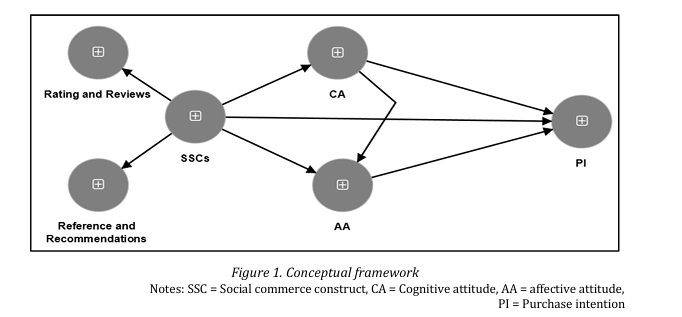
commerce constructs (ratings, reviews, and recommendations) on social commerce sites, these signals influence the (organism) the cognitive and affective states of customers which affect their purchase behaviors on social commerce sites (response). So, the cognitive and affective states of the organism mediate the relationship between stimulus and response. In the present study, ratings & reviews, and references & recommendations are adopted as second-order latent constructs of social commerce (Hajli, 2015).
Social commerce
To make online purchases more interesting and involved, social media and e-commerce are combined, this practice is known as “social commerce” (Hajli, 2015). Due to the rising usage of social media platforms and the potential for social media to affect consumer behavior, it has grown in prominence in recent years. Many constructs have been highlighted as essential in the context of social commerce, including social presence, trust, perceived utility, and perceived enjoyment. In the context of social commerce, social presence has been demonstrated to have a favorable effect on consumer behavior (Lăzăroiu, 2020). In social commerce, consumers’ decision-making is heavily influenced by their level of trust (Cheng et al., 2019). In the context of social commerce, trust has a large positive impact on consumers’ purchase intentions, according to a study by Hajli (2016). Consumer attitudes and intentions toward social commerce have been positively influenced by two additional constructs: perceived utility and perceived fun (Chen & Barnes, 2007; Wu & Wang, 2005). As a result, social commerce is a complicated phenomenon that incorporates many different notions. These building blocks can be used by businesses to give their customers an interactive and engaging online buying experience. Social commerce appears to be a promising concept, according to statistics (Leong et al., 2020). The purpose of social commerce, which is based on online communities, is to incorporate Web 2.0 elements into e-commerce to establish customer-focused initiatives. Businesses can establish an online community as part of their social commerce strategy and allow their clients to share their perspectives, anecdotes, and expertise about their products and services. As an alternative, companies can sell their goods on popular SNSs like Facebook by becoming members of those platforms, or they can encourage users to “like” their items or pages to benefit from social commerce (Lina & Ahluwalia, 2021; Sheikh, 2019).
Social commerce constructs
Social commerce integrates social media technologies in e-commerce platforms, allows customers to communicate with one another and businesses through online groups, and societies, and generates reviews, ratings, and recommendations (Hajli, 2015). The research has identified several social commerce constructs that have an important influence on attitude and behavior. Two important social commerce constructs are rating and reviews and references and recommendations which have been used in the current study to examine the effects on the affective and cognitive attitude that ultimately influences online purchase intention. Ratings and reviews are a group of services provided by social commerce websites that enable users to share product feedback and influence one another’s purchasing decisions (Shadkam & O’Hara, 2013). Through online recommendations and referrals, customers can share information that assists their friends and peer groups in taking purchase decisions (Kim & Park, 2013).
Rating, Reviews, and Cognitive Attitude
In the online economy, the phenomena of ratings and reviews have grown in importance. When making purchases, customers frequently refer to the ratings and reviews left by other customers (Yang et al., 2020). Past studies have demonstrated that ratings and reviews can significantly affect a consumer’s cognitive attitude, which is referred to as the ideas and opinions a person has about a good or service. The valence or polarity of the reviews is a significant factor that influences cognitive attitude. Negative reviews tend to reduce consumers’ opinions of the good or service, whilst positive ones tend to boost those (Featherstone & Zhang, 2020). Moreover, the quantity or number of reviews may also have an impact on cognitive attitude. Anglim et al. (2019) assert that more evaluations tend to improve cognitive attitude because they show increased agreement among reviewers and give a more comprehensive picture of the good or service. Ratings and reviews do influence cognitive attitude, however, this relationship is not always straightforward. Research has shown that several variables can affect how ratings and reviews affect cognitive attitude. For instance, the type of product may influence how reviews affect cognitive attitude and the communication channel (Duffett, 2020). The effect could also be affected by the reviewer’s experience, self-disclosure, and the caliber of the evaluations (Yang et al., 2020).
Social commerce constructs, cognitive attitude and purchase intention
Mutually in personal and professional contexts, references and recommendations are crucial instruments for decision-making. An individual’s cognitive attitude can affect how they interpret and react to recommendations and references, which in turn affects how they make decisions. Shih and Venkatesh (2004) discovered that people were more likely to follow
recommendations from people they believed to be reliable and trustworthy. Yang, Kim, and Kim (2017) investigated how reference groups influence affected the choices made by consumers, when people were exposed to favorable testimonials from their social network, they were more inclined to make a purchase. Similarly, people who conformed to their reference group more readily were more likely to be persuaded by their assistance Gao et al. (2021) looked into how cognitive biases affect people in making decisions. People who had higher levels of confirmation bias were less willing to accept advice that went against their preconceived notions. The elaboration likelihood model of persuasion was created by Petty et al. (1986), and it contends that the amount of cognitive processing people undertake when assessing a recommendation or reference affects their attitudes towards it.
A thorough assessment of the literature on social media marketing revealed that the references and suggestions people share on social media can have an impact on their attitudes and behavior. In the cross-cultural investigation of the influence of reference groups on purchasing decisions, Zha et al. (2018) discovered that people with higher levels of
collectivism were more likely to be persuaded by recommendations from their social network. The influence of biases in decision-making on the success of advertising and promotion was examined by Kim et al. (2020) framing effect and the availability heuristic, among other biases, were discovered to have a significant effect on people’s reactions to
referrals and references.
H1: Social commerce constructs have a significant positive impact on cognitive attitude.
H2: Cognitive attitude mediates the relationship between social commerce constructs and online purchase intention.
Social commerce constructs, affective attitude, and purchase intention
Rating and reviews refer to the assessment and comments made by consumers or users of a good or service. Reviews are written accounts of the user’s experience, ideas, and opinions regarding the good or service, whereas ratings typically involve a numerical scale, such as a star rating. Ratings and reviews can be found on a variety of online platforms, including social media, review sites, and e-commerce websites, and they can offer useful information to prospective customers or users (Kim et al., 2021). The valence of the evaluations is a significant component that influences how ratings and reviews affect affective attitudes. Consumers’ confidence in a good or service tends to rise after reading positive reviews, which
results in more positive affective attitudes, while the opposite is true after reading bad reviews, which can lower confidence and produce more negative affective attitudes. However, elements including the number of reviews, the nature of the product, and the reviewer’s source can temper the impact of review valence (Hsu, 2022; Yang & Che, 2020;
Ahmad & Hadi, 2020). Another critical element is the accuracy of reviews that are specific and detailed, as well as those written by people who are viewed as being similar to themselves and are more likely to be trusted by consumers (Forman et al., 2008). However, recent research has demonstrated that several variables, including reviewer experience, review length, and review source, can have an impact on the reliability of reviews. Affective attitudes can be affected by a product or service’s overall rating. According to research, moderate overall evaluations have a greater impact than excessively good or negative ones since they are perceived as being more believable and realistic (Zablocki, Schlegelmilch &
Houston, 2019). Moreover, recent research has demonstrated that individual variations including self-construal, emotion control, and a demand for individuality might reduce the negative effects of review valence on affective attitudes (Stevens et al., 2020).
The basic elements that can affect a consumer’s decision-making and affective attitude are references and recommendations. Consumer attitudes and impressions of goods and services are increasingly influenced by reviews, particularly those found online. 86% of buyers read online reviews before making a purchase, demonstrating the value of online evaluations for businesses (Pantelimon, 2020). References and recommendations are essential components of online consumer behavior because they inform prospective customers or users about the good or service in question. The emotional reaction a person has to a good or service is referred to as an affective attitude, and it is a significant element
that might affect a consumer’s choice of a product or service (Lu et al., 2021). The source of the reference or suggestion is a significant factor that influences emotional attitude. In contrast to negative references and recommendations, good references and recommendations tend to boost positive affective attitudes about the product or service. The precision and applicability of the reference or advice might also have an impact on how you feel (Svenningsson, 2021). A reference or recommendation for instance that emphasizes a particular quality or benefit that is pertinent to the person’s requirements or preferences may cause them to feel more positively effective. References and recommendations are a crucial part of online consumer activity overall, and they have a big impact on how customers feel. Affective attitude can play a moderating role in measuring the effect of social commerce constructs on online purchase intention (Pang, 2021). Online reviews’ effects on emotional attitudes might vary based on several circumstances, according to research. For instance, the
polarity of the review, whether favorable or negative, can have a big impact on how one feels (Phipps, 2021). When compared to negative evaluations, positive reviews tend to boost favorable emotional attitudes towards the good or service. Nonetheless, the perceived legitimacy and dependability of the review source can also have an impact on how reviews change affective attitudes (Nzeku & Duffett, 2021). An unfavorable emotional attitude may result from either too few or too many reviews. Moreover, affective attitude may be influenced by the review’s substance. According to research, reviews that are more explicit, reliable, and descriptive have an impact on emotional attitudes more than evaluations that
are more generic or unclear.
H3: Social commerce constructs have a significant positive impact on affective attitude.
H4: Affective attitude mediates the relationship between social commerce constructs and online purchase intention.
Cognitive and affective attitudes and online purchase intention
Ajzen (1991) claimed that the theory of behavioral intention asserts that intention is a factor that determines one’s behavior right away. Due to the importance of this idea in terms of driving human behavior, it is necessary to assess and comprehend what aspects maybe if there was an intention. In addition, Afendi (2020) claimed that the notion connecting
cognitive and affective behavior might be an intention. The degree to which a person has a favorable or unfavorable cognitive or affective behavior regarding an issue is referred to as their attitude towards that behavior (Ajzen, 1991). According to Park et al. (2013), one’s attitude towards e-customized products mediates the link between the psychological
characteristics of consumers and purchase intention. They concluded that the attitudes of consumers towards an object are a major factor in the intention to buy. The idea of reasoned action states that views of consumers’ cognitive and affective attitudes affect their intentions to purchase a product favorably (Madden et al., 1992). Attitude plays a significant mediating role between social commerce constructs and online purchase intention (Zhu et al. 2020).
H5: Cognitive attitude has a significant positive impact on affective attitude.
H6: Cognitive attitude has a significant positive impact on online purchase intention.
H7: Affective attitude has a significant positive impact on online purchase intention.
H8: Cognitive attitude and affective attitude serially mediate the relationship between social commerce constructs and online purchase intention.
Online Purchase Intention
The technology acceptance model (TAM) is considered one of the best models to measure intentions (Pavlou, 2003). To predict an individual’s intention to use information technologies, two basic hypotheses can be used (Mathieson, 1991). First, Ajzen (1989) proposed TAM, and second the idea of planned behavior. In the current study, intention to buy refers to “customers’ desire to make an online purchase with the use of social networking sites”.
According to Martins et al. (2014), TAM is an imperative factor in e-commerce research studies. Internet purchasing has transformed the retail industry and boosted market rivalry (Kühn & Petzer, 2018). Consumers enjoyed their shopping, and stores currently offer more opportunities for customer engagement and assistance. There hasn’t been much study of the factors that affect e-commerce websites and their traits. According to the S-O-R framework, responses indicate the conclusions and choices made by users based on their cognitive and affective attitudes. Factors included trust in websites and views about websites based on the stimulus-organism-response framework and TPB, as well as impressions of web design, privacy based on adoption theory, customer service, and dependability (Wu et al., 2017; Dutta & Bhat, 2016). The latest studies encourage businesses to make their physical presence and online more appealing to customers to boost sales. Managing an effective online business needs having a deep understanding of how these many factors affect customers’ purchasing decisions. In light of the COVID-19 pandemic, studies have examined consumers’ online shopping behaviors. Ozturk (2020) looked into the effects of utilitarian and hedonistic attitudes on customer purchase intentions. Eti et al. (2021) investigated the influence of social media on online buying behavior. Zwanka and Buff (2021) offered context for the changes in customer behavior, while Sheth (2020) proposed how COVID-19 changed consumer behavior. A specific firm or product is the focus of some consumer research on social commerce purchases, according to COVID-19. Prior research has not examined the connections between pandemic concerns and social commerce constructs, social support, social presence, and consumer trust. H9: Social commerce constructs have a significant positive impact on online purchase intention.
Methodology
Based on the underpinning theory, the model was developed to examine the hypothesis using empirical investigation. For this, a questionnaire was adapted and floated among the respondents for the collection of data.
Scope of study
The current study encompasses individuals that use information technology and the internet for making purchases. Social commerce integrates e-commerce into social media technologies. This not only allows customers to make online purchases but also communicate with each other and businesses through online ratings and reviews, recommendations, and information exchange. Previously, online information sharing between companies and customers was impractical due to high costs however, due to advancements in technology, online purchase experiences for customers have become more social. In addition, companies have been able to initiate and manage social experiences with customers online due to these reduced costs (Al-Adwan & Kokash, 2019).
Population
Social commerce constructs are categorized into two classes with one focusing on traditional e-commerce sites that are traditionally product oriented and focus on one-way communication for example Amazon, Daraz etc. The second category is based on the integration of e-commerce into social sites which support two-way interaction and is customer oriented (Huang & Benyoucef, 2013). Consumer participation is a pivotal part of these social commerce websites and platforms including Facebook, Twitter, etc. Therefore, keeping in view the dynamics of the current social commerce sites, consumers of both traditional e-commerce and modern-day social networking sites with the integration of e-commerce were included in the current study for data collection.
Sampling technique
Data was gathered using a mix of two sampling techniques. At the start of the data collection process, convenience sampling was used, and a questionnaire was sent to respondents using social platforms including WhatsApp, Facebook, Twitter, and the e-mail addresses of respondents. The questionnaire’s link was shared with respondents for data collection. For increasing the number of responses, respondents to whom the questionnaire was sent were requested to further circulate it among their social circle adding a second sampling technique for our research which is snowball sampling. The sample size was calculated using G*Power designed by Faul et al. (2009). The sample size was calculated using the parameters of (0.15) effect size, (0.05) α level, and (0.95) significance level with several predictors set to 1. G*power suggested an appropriate sample size of 238 for the current research. The questionnaire was floated to 200 respondents who further floated it in their social circles giving total responses of 280. Out of these, 27 were discarded due to incomplete responses, so a total of 253 responses were available for analysis.
Instrument development
Current research has four variables: social commerce constructs, affective attitude, cognitive attitude, and purchase intentions. Data for the current research was collected using a five-point Likert scale with 1 coded as strongly disagree, 2 as disagree, 3 as neutral, 4 as agreed, and 5 as strongly agree. SCCs have further two dimensions which are ratings and reviews, and references and recommendations.
Data collection
Data for the study was collected using a questionnaire and the target of the current study were individuals that have used social commerce sites for making purchases over the last six months. The data for the current study was collected using google forms in which the questionnaire was sent to respondents and their participation was voluntary. The respondents must purchase products through these sites in the last six months so that they have a recollection of their experience with the use of these websites.
Measures
SCC was measured using 11 items adapted scale given by Pagani and Mirabello (2011). It had two dimensions: rating and reviews, and recommendations and referrals. The items included “I am interested in ratings and reviews from other users” and “This site does a good job of getting its visitors to make recommendations”. The cognitive attitude was measured using an adapted version of the questionnaire from Gefen et al. (2003) and Kumar and Benbasat (2006) containing four items. For example, “I think reviews, ratings, and recommendations on this social commerce site enable me to search and buy things faster”. The affective attitude was measured using Koufaris (2002) and Hassanein and Head (2005) adapted questionnaire containing four items. For example, “Based on reviews, ratings, and recommendations I found my visit to this social commerce site fun”. Purchase intention on social commerce websites was measured using an adapted version of Hsiao et al. (2010) four items scale including “I am like to buy the products on this social commerce website.” All the items used in the current study were reflective (Hadi, 2022).
Data analysis
Analysis for the current study was conducted using structural equation modeling (SEM) which has been recommended by many authors due to its advantages over other techniques (Ullman & Bentler, 2012). SEM has also been suggested, as it is good for conducting factor and path analysis especially when the reliability and validity of the model under research have to be examined. Under Structural equation modeling (SEM) two models namely: measurement and structural models were examined. Analysis for moment structures (AMOS V 22) was employed to test the measurement model. The measurement model examines the relationship between latent variables and their respective items also known as the outer model. For this, factor loadings, Average variance extracted (AVE), and composite reliability (CR) were tested. Statistical package for social sciences (SPSS V 23) was used to test the structural model. The structural model examines the relationship between latent variables conceptualized based on underlying theory. PROCESS macros for statistical package for social sciences (SPSS V 23) provided by Hayes (2012) were used to test the structural model.
Analysis
Demographics
Table 1 shows the demographics of respondents. 136 respondents were male at 53.8% and 117 were female at 46.2%. 112 respondents were 25 or under at 44.3%, 101 were between 26 to 40 at 39.9% with two slabs comprising 84.2% depicting that the majority of the population in Pakistan is under the ceiling of 40 years hinting at a large pool of employable workforce. 24 respondents were between 41 to 55 with 9.5% and 16 were above the age of 55 with 6.3%. For education, 35 respondents had higher secondary school certificates with 13.8%. 135 respondents reported that they had bachelor’s degrees with 53.4%. 48 respondents had master’s degrees contributing 19.0% and 35 respondents had higher qualifications than master’s with 13.8%. for experience, 177 had less than 3 years of professional experience contributing 70%, while 41 had 3 to 5 years of experience with 16.2%. 35 respondents mentioned that they had the experience of 6 to 10 years.
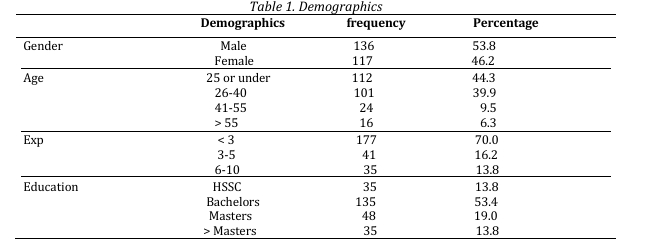
Table 2 shows the correlation among variables. Results show that SCC had a significant correlation with CA (r = 0.67, p < 0.01), AA (r = 0.69, p < 0.01), and PI (r = 0.62, p < 0.01). CA had a significant correlation with AA (r = 0.77, p < 0.01), and PI (r = 0.38, p < 0.01). In addition, AA was also found to have a significant correlation with PI (r = 0.49, p < 0.01). Also, Gender had a mean value (M = 1.46), depicting more male respondents than females and education mean (M = 3.33) showing that most respondents had bachelor’s degrees.
Correlations
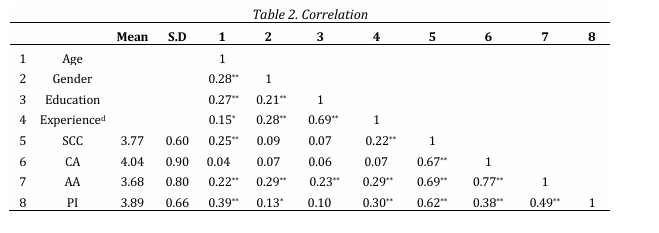
Notes: *p < 0.05, **p < 0.01 SCC = Social commerce construct, CA = Cognitive attitude, AA = Affective attitude, PI = Purchase intention, S.D = standard deviation a = age was coded as 1 = 25 or less, 2 = 26 to 40, 3 = 41 to 55, 4 = > 55 b = Gender was coded as 1 = male, 2 = female c = Education was coded as 1 = senior secondary school certificate (matriculation), 2 = higher secondary school certificate (HSSC), 3 = bachelors (16 years), 4 = masters (18 years), 5 = higher, 6 = other d = Experience was coded as 1 = less than 3 years, 2 = 4 to 5 years, 3 = 6 to 10 years, 4 = more than 4 years
Confirmatory factor analysis
Table 3 shows factor loadings of items on their respective constructs. Sharma et al. (2005) recommended that items having loadings above 0.6 be retained and any items having loadings below that should be removed.
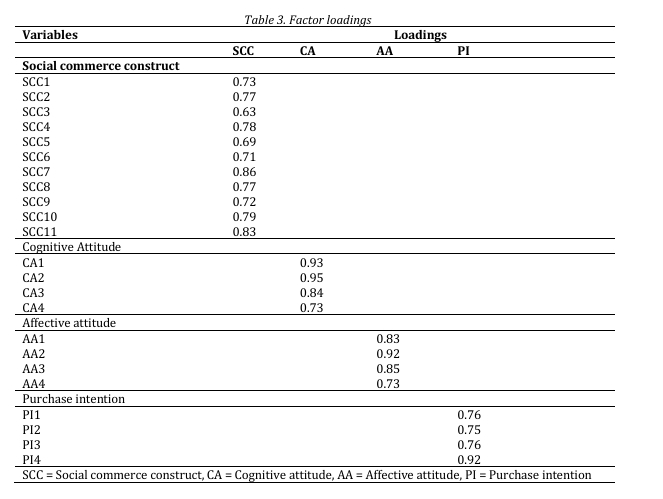
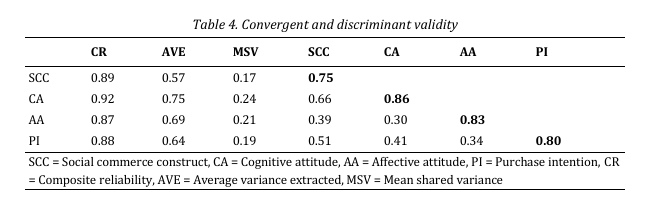
Validity was checked using average variance extracted (AVE), mean shared variance (MSV), and the square root of AVE while reliability was checked using composite reliability (CR). AVE values were higher than MSV proving that constructs had good discriminant validity. Values of convergent reliability were higher than 0.7 and also AVE values were higher than 0.5 hinting at good convergent validity as per Fornell and Larcker’s (1981) criterion. Moreover, the square root of AVE was higher than the correlations with other constructs further establishing good convergent validity. Harman’s (1976) single-factor test was employed to check for common method bias and the variance explained by a single factor was 37% which was below the threshold of 50% (Podsakoff et al., 2012).
Hypotheses testing
Parallel and serial mediation for the current study was tested using model 6 of PROCESS macros via bootstrapping technique (Hayes, 2012). PROCESS macros rely on ordinary least squares (OLS) for developing models based on observed variables. PROCESS macros are more capable of testing parallel and serial mediation as they can provide more statistics that are not available in standard statistical packages (e.g., SPSS and SAS) (Qadri et al., 2021). Moreover, Creedon and Hayes (2015) highlighted that “bootstrap confidence intervals constitute a good approach for detecting path coefficients”. Furthermore, “obtaining bootstrapped confidence intervals for specific indirect effects could be problematic in the
majority of SEM programs”. AMOS provides confidence intervals using bootstrapping for overall indirect effects, it cannot provide bootstrap confidence intervals for specific indirect paths (Leth-Steensen & Gallitto, 2016). Considering the arguments provided, PROCESS macros are a better-suited tool to test indirect effects in the current study. Process Macros template model 6 provided by Hayes (2012) is apt tool for testing serial mediation.
Direct effects
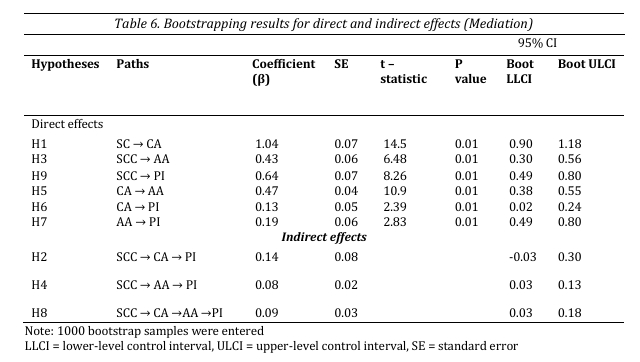
Table 6 shows that SCC had a significant direct effect on CA (β = 1.04, p < 0.01; CI [0.90, 1.18]), AA (β = 0.43, p < 0.01; CI [0.30, 0.56]). Therefore, hypotheses H1 and H3 were accepted. Furthermore, CA had a significant positive impact on AA (β = 0.47, p < 0.01; CI [0.38, 0.55]), PI (β = 0.13, p < 0.01; CI [0.02, 0.24]) thus supporting hypotheses H5 and H6. AA was also found to have a significant positive impact on PI (β = 0.19, p < 0.01; CI [0.38, 0.55]) thereby supporting hypothesis H7. Lastly, SCC was found to have significant impact on PI (β = 0.64, p < 0.01; CI [0.49, 0.80]) supporting hypothesis H9.
Indirect Effects and serial mediation
Indirect Effects and serial mediation For indirect effects, Table 6 also shows that the indirect effect of CA (β = 0.14, SE = 0.08; CI [-0.03, 0.30]) was insignificant as “0” fell between upper and lower confidence interval values, whereas AA (β =0.08, SE = 0.02; CI [0.03, 0.13]) between SCC and PI was statistically significant. The results prove that social commerce construct and purchase intention relationship is not mediated by cognitive attitude. Contrary to that, affective attitude is found to mediate the relationship between social common construct and purchase intention. Thus, hypothesis H2 was rejected, and H4 was accepted. Results also show that the indirect effect of SCC on PI through the serial effect of CA and AA was also significant (β =0.09, SE =0.03; CI [0.03, 0.18]). This proves that social commerce construct relationship with purchase intention is routed through cognitive and affective attitude of consumers. As a result, hypothesis H8 was accepted. Results also proved that for parallel mediation, the impact of CA (β =0.14) was greater than AA (β = 0.08) which proves that cognitive attitude has more impact on purchase intention of employees in comparison of affective one. Lastly, serial mediation through CA and AA (β = 0.09) was greater than AA (β = 0.08) but lesser than the impact of CA as a mediator (β = 0.14). Thus, results prove that cognition is the most pivotal factor influencing purchase intention even more than the serial affect of cognitive and affective attitude.
Discussion
The purpose of the current study was to examine the impact of the social commerce construct on purchase intention with serial mediation of cognitive and affective attitude and parallel mediation of the said variables. The relationship between social commerce construct and purchase intention lacks empirical support in the context of parallel and serial mediation of customer’s attitude and current study strives to fill the gap by testing the said relationships. Social commerce construct is a substantial phenomenon in the current era characterized by the growing use of the internet for making purchases (Lăzăroiu, 2020). Consumers while making online purchases not only go through the ratings and reviews given by the former buyers but also read their recommendations to make the purchase decisions. Hence, results proved that when it comes to making online purchases, the importance of the social commerce construct cannot be ignored. Ratings, reviews, recommendations, references, and suggestions aid in building consumer confidence in the end product and support in
cementing their decision to spend money on the product (Yang et al., 2020). Positive ratings, reviews, and recommendations highlight the value that the product adds to the consumer experience.
Social commerce construct does not affect the thought process of consumers for making online purchases. Consumers compare the advantages vs costs to make up their minds for final purchases and SCC might not make a substantial contribution in that. However, SCC influences the emotional attributes of consumers for making online purchases. To make a final purchase decision, consumers need to feel a sense of emotional connection which is structured by the opinions and feelings that customers carry for the product (Duffett, 2020). Emotional reviews trigger positive emotional responses which induce consumers to make purchase decisions. Positive opinions and feelings build a positive intention for the purchase of the product and vice versa. So, SCC does not contribute to a cognitive but emotional orientation towards a product. The findings partially align with the premise of SOR model supporting the argument that environmental factors / stimuli (SCC) in our case alter the emotional state of individuals (customers) leading towards certain behavior (purchase intention).
Our research also substantiated the impact of SCC on making online purchase decisions via cognitive and affective components of attitude (Featherstone & Zhang, 2020). SCC triggers the thought process of the consumer to evaluate and rate the product which if positive, stimulates apt and constructive emotions towards the product ultimately leading to making an online purchase. To sum it up, online purchase nowadays is a comprehensive experience rather than a single event in which consumers undergoing online purchase decision experience start with evaluation and examination of online reviews, recommendations, and ratings available triggering cognitive thought process that leads to certain emotions which ultimately affect the consumer purchase decision (Gao et al., 2021).
The research contributes to the existing literature by examining the importance of cognitive and affective attributes of attitude and is in line with the existing findings. Cognitive attitude does not influence the purchase decision while the emotional element is found to have a significant impact on the purchase decision (Pantelimon, 2020) hinting at cognitive dissonance which supports the argument that emotional connect acts as a deal breaker for making purchase decisions (Lu et al., 2021). The study also contributes to literature available on digital marketing as the results drawn are based on a sample of consumers making online purchases which can aid the marketers in understanding behavioral patterns in age of digitalization.
Conclusion
Social commerce constructs are found to have a significant impact on online purchase decisions. Cognitive attitude does not contribute to shaping customers online purchase decisions rather, emotional attitude is pivotal for making purchase decisions. In addition, cognitive attitudes leading to affective ones contribute to purchase decisions highlighting the importance of the consumer experience for making online purchases. Ratings, reviews, and recommendations are pivotal when it comes to expanding the horizons of an online marketplace and can aid customers to get to a final decision.
Implications
Organizations, especially the ones selling products and services online, should ensure that their websites and online platforms not only provide support for sharing customers’ reviews and feedback but also make those feedback public so that other customers get the opportunity to use them for their benefit. The current study can aid online sellers in understanding the importance of emotional appeal and should develop online referral and recommendation systems in ways that can capture the essence of the online purchase experience. Moreover, customers can be requested to share their experiences, especially the recommendations based on the emotional connections that helped them to connect to the product. Online referral systems and discount coupons can be provided for customers providing feedback regarding the products. Moreover, follow-up regarding the products and their value addition for customers can also be added on online platforms to gauge the sustainability aspects and their value for customers.
Limitations and future directions
The current research had several limitations. Not all online platforms working in Pakistan are fully developed to capture reviews, ratings, recommendations, and customer feedback which was a limitation. Moreover, customers in Pakistan are not fully aware of the importance of ratings and reviews and how these can help to improve the online shopping experience. Keeping these points in consideration, it is safe to say that online selling platforms are still in their infancy stage. Another issue was the low willingness of customers to share information related to their online purchase experience because of fear of future issues with the vendors. Data collected for the current study was cross-sectional and longitudinal data can be collected in the future to get a more extended perspective.
References
Ahmad, A., & Hadi, N.U. (2020). Impact of Digitization on Consumer Buying Behavior with Respect to Consumer Demographic Factors. Foundation University Journal of Business & Economics, 5(1), 1-20.
Abbasi, A. Z., Tsiotsou, R. H., Hussain, K., Rather, R. A., & Ting, D. H. (2023). Investigating the impact of social media images’ value, consumer engagement, and involvement on eWOM of a tourism destination: A transmittal mediation approach. Journal of Retailing and Consumer Services, 71, 103231.
Abbas, A. F., Jusoh, A. B., Mas’od, A., & Ali, J. (2020). Bibliometric analysis of global research trends on electronic word of mouth using Scopus database. Journal of Critical Reviews, 7(16), 405-412.
Afendi, A. (2020). The effect of halal certification, halal awareness and product knowledge on purchase decisions for halal fashion products. Journal of Digital Marketing and Halal Industry, 2(2), 145-154. Ajzen, I. (1989). Attitude structure and behavior. Attitude structure and function, 241, 274.
Al-Adwan, A. S., & Kokash, H. (2019). The driving forces of Facebook social commerce. Journal of Theoretical and Applied Electronic Commerce Research, 14(2), 15–32.
Al-Omoush, K. S., de Lucas Ancillo, A., & Gavrila, S. G. (2022). The role of cultural values in social commerce adoption in the Arab world: An empirical study. Technological Forecasting and Social Change, 176, Article number 121440.
Anglim, J., Sojo, V., Ashford, L. J., Newman, A., & Marty, A. (2019). Predicting employee attitudes to workplace diversity from personality, values, and cognitive ability. Journal of Research in Personality, 83, Article number 103865.
Busalim, A. H., & Ghabban, F. (2021). Customer engagement behavior on social commerce platforms: An empirical study. Technology in Society, 64, 101437.
Chen, Y. H., & Barnes, S. (2007). Initial trust and online buyer behavior. Industrial management & data systems, 107(1), 21-36.
Cheng, X., Gu, Y., & Shen, J. (2019). An integrated view of particularized trust in social commerce: An empirical investigation. International Journal of Information Management, 45, 1-12.
Creedon, P. S., & Hayes, A. F. (2015). Small sample mediation analysis: How far can we push the bootstrap. Annual Conference of the Association for Psychological Science.
Duffett, R. (2020). The YouTube marketing communication effect on cognitive, affective and behavioral attitudes among Generation Z consumers. Sustainability, 12(12), 5075.
Dutta, N., & Bhat, A. (2016). Exploring the effect of store characteristics and interpersonal trust on purchase intention in the context of online social media marketing. Journal of Internet Commerce, 15(3), 239-273.
Eti, I. A., Horaira, M. A., & Bari, M. M. (2021). Power and stimulus of social media marketing on consumer purchase intention in Bangladesh during the COVID-19. International Journal of Research in Business and Social Science (2147-4478), 10(1), 28-37.
Faul, F., Erdfelder, E., Buchner, A., & Lang, A.-G. (2009). Statistical power analyses using G* Power 3.1: Tests for correlation and regression analyses. Behavior Research Methods, 41(4), 1149–1160.
Featherstone, J. D., & Zhang, J. (2020). Feeling angry: the effects of vaccine misinformation and refutational messages on negative emotions and vaccination attitude. Journal of Health Communication, 25(9), 692-702.
Forman, C., Ghose, A., & Wiesenfeld, B. (2008). Examining the relationship between reviews and sales: The role of reviewer identity disclosure in electronic markets. Information systems research, 19(3), 291-313.
Fornell, C., & Larcker, D. F. (1981). Evaluating structural equation models with unobservable variables and measurement error. Journal of Marketing Research, 39–50.
Friedrich, T., Schlauderer, S., & Overhage, S. (2019). The impact of social commerce feature richness on website stickiness through cognitive and affective factors: An experimental study. Electronic Commerce Research and Applications, 36, 100861.
Gao, Y., Xie, Z., & Li, D. (2021). Electronic cigarette users’ perspective on the COVID-19 pandemic: observational study using Twitter data. JMIR Public Health and Surveillance, 7(1), e24859.
Gefen, D., Karahanna, E., & Straub, D. W. (2003). Trust and TAM in online shopping: An integrated model. MIS Quarterly, 51–90.
Goraya, M. A. S., Jing, Z., Shareef, M. A., Imran, M., Malik, A., & Akram, M. S. (2021). An investigation of the drivers of social commerce and e-word-of-mouth intentions: Elucidating the role of social commerce in E-business. Electronic Markets, 31, 181-195.
Hadi, N. U. (2022). Specifying the Problem of Measurement Models Misspecification in Management Sciences Literature. Journal of International Cooperation and Development, 5(3), 106-115.
Hadi, N.U., Abdullah, N., Zygiaris, S., Ahmad, G., Saleh, M.F., & Hossain, M.M. (2023). Determinants of Small Business Success: A Harmonization Between Resources and Strategies. In Hamdan, A., Harraf, A., Buallay, A., Arora, P., Alsabatin, H. (Eds.).
From Industry 4.0 to Industry 5.0. Studies in Systems Decision and Control. Cham: Springer
Hajli, M. (2013). A research framework for social commerce adoption. Information Management & Computer Security, 21(3), 144-154.
Hajli, N. (2015). Social commerce constructs and consumers’ intention to buy. International journal of information management, 35(2), 183-191.
Hajli, N., & Lin, X. (2016). Exploring the security of information sharing on social networking sites: The role of perceived control of information. Journal of Business Ethics, 133, 111 123.
Hajli, N., Sims, J., Zadeh, A. H., & Richard, M. O. (2017). A social commerce investigation of the role of trust in a social networking site on purchase intentions. Journal of Business Research, 71, 133-141.
Hameed, F., Malik, I. A., & Hadi, N.U., & Raza, M.A. (2023). Brand awareness and purchase intention in the age of digital communication: A moderated mediation model of celebrity endorsement and consumer attitude. Online Journal of Communication and Media Technologies, 13(2), Article number e202309.
Harman, H. H. (1976). Modern factor analysis. University of Chicago Press.
Hassanein, K., & Head, M. (2005). The impact of infusing social presence in the web interface: An investigation across product types. International Journal of Electronic Commerce, 10(2), 31–55.
Hayes, A. F. (2012). PROCESS: A versatile computational tool for observed variable mediation, moderation, and conditional process modeling. University of Kansas, KS.
Herold, K., Sipilä, J., Tarkiainen, A., & Sundqvist, S. (2018). Facts or opinions: Which make a difference? Word-of-mouth and attitude change in a high-involvement service context. Services Marketing Quarterly, 39(4), 261-276.
Hsiao, K.-L., Chuan-Chuan Lin, J., Wang, X.-Y., Lu, H.-P., & Yu, H. (2010). Antecedents and consequences of trust in online product recommendations: An empirical study in social shopping. Online Information Review, 34(6), 935–953.
Hsu, L. C. (2022). Effect of eWOM review on beauty enterprise: a new interpretation of the attitude contagion theory and information adoption model. Journal of Enterprise Information Management, 35(2), 376-413.
Huang, Z., & Benyoucef, M. (2013). From e-commerce to social commerce: A close look at design features. Electronic Commerce Research and Applications, 12(4), 246–259.
Khalid, Z., & Hadi, N. U. (2021). Measuring a Multifaceted Concept: A high Order Confirmatory Factor Analysis Towards Internal Marketing. Management & Marketing. Challenges for the Knowledge Society, 16(3), 228-245. Kim, M., Lee, S. M., Choi, S., & Kim, S. Y. (2021). Impact of visual information on online consumer review behavior: Evidence from a hotel booking website. Journal of Retailing and Consumer Services, 60, Article number 102494.
Kim, S., & Park, H. (2013). Effects of various characteristics of social commerce (s-commerce) on consumers’ trust and trust performance. International Journal of Information Management, 33(2), 318-332.
Kim, S., Baek, T. H., & Yoon, S. (2020). The effect of 360-degree rotatable product images on purchase intention. Journal of Retailing and Consumer Services, 55, Article number 102062.
Koufaris, M. (2002). Applying the technology acceptance model and flow theory to online consumer behavior. Information Systems Research, 13(2), 205–223.
Kühn, S. W., & Petzer, D. J. (2018). Fostering purchase intentions toward online retailer websites in an emerging market: An SOR perspective. Journal of Internet Commerce, 17(3), 255-282.
Kumar, N., & Benbasat, I. (2006). Research note: The influence of recommendations and consumer reviews on evaluations of websites. Information Systems Research, 17(4), 425–439.
Lăzăroiu, G., Neguriţă, O., Grecu, I., Grecu, G., & Mitran, P. C. (2020). Consumers’ decision making process on social commerce platforms: Online trust, perceived risk, and purchase intentions. Frontiers in Psychology, 11, 890.
Lee, K. Y., & Choi, H. (2019). Predictors of electronic word-of-mouth behavior on social networking sites in the United States and Korea: Cultural and social relationship variables. Computers in Human Behavior, 94, 9-18.
Leong, L. Y., Hew, T. S., Ooi, K. B., & Chong, A. Y. L. (2020). Predicting the antecedents of trust in social commerce–A hybrid structural equation modeling with a neural network approach. Journal of Business Research, 110, 24-40.
Leth-Steensen, C., & Gallitto, E. (2016). Testing mediation in structural equation modeling: The effectiveness of the test of joint significance. Educational and Psychological Measurement, 76(2), 339–351.
Li, C. Y. (2019). How social commerce constructs influence customers’ social shopping intention? An empirical study of a social commerce website. Technological Forecasting and Social Change, 144, 282-294.
Li, M. H. (2019). Exploring short video application users’ visit intention: Applying the stimulus-organism-response model. Asian Social Science, 15(12), 8-19.
Lina, L. F., & Ahluwalia, L. (2021). Customers’ impulse buying in social commerce: The role of flow experience in personalized advertising. Jurnal Manajemen Maranatha, 21(1), 1-8.
Lu, H., Nie, P., & Qian, L. (2021). Do quarantine experiences and attitudes towards COVID-19 affect the distribution of mental health in China? A quantile regression analysis. Applied Research in Quality of Life, 16, 1925-1942.
Madden, T. J., Ellen, P. S., & Ajzen, I. (1992). A comparison of the theory of planned behavior and the theory of reasoned action. Personality and social psychology Bulletin, 18(1), 3-9.
Mahmood, M., Batool, S. H., Rafiq, M., & Safdar, M. (2022). Examining digital information literacy as a determinant of women’s online shopping behavior. Information Technology & People, 35(7), 2098-2114.
Malik, I. A., & Hadi, N. U. (2019). Inspirational factors of electronic word of mouth: a case of social networking sites. Journal of Managerial Sciences, 13(2), 253-254. Malik, I.A., Hadi, N.U., Raza, M.A., Lodhi, R.N., & Shabbir, S.A. (2020). Apprehending Inspirational Persuasion Factors for Intention to use eWOM by Highlighting Mediation of Attitude towards eWOM: A Case of Social Network Sites. Pacific Business Review International, 13(4), 83-98.
Martins, C., Oliveira, T., & Popovič, A. (2014). Understanding the Internet banking adoption: A unified theory of acceptance and use of technology and perceived risk application. International journal of information management, 34(1), 1-13.
Mathieson, K. (1991). Predicting user intentions: comparing the technology acceptance model with the theory of planned behavior. Information systems research, 2(3), 173-191.
Mikalef, P., Giannakos, M. N., & Pappas, I. O. (2017). Designing social commerce platforms based on consumers’ intentions. Behavior & Information Technology, 36(12), 1308-1327.
Ng, C. S. P. (2013). Intention to purchase on social commerce websites across cultures: A cross-regional study. Information & Management, 50(8), 609-620.
Nzeku, B., & Duffett, R. G. (2021). The Use of Social Media as a Marketing Tool by Tourist Attractions: Influence on Cognitive, Affective and Behavioural Consumer Attitudes. African Journal of Hospitality, Tourism and Leisure, 10(2), 742-758.
Ozturk, R. (2020). Health or death? The online purchase intentions of consumers during the COVID-19 pandemic. Transnational Marketing Journal (TMJ), 8(2), 219-241. Pagani, M., & Mirabello, A. (2011). The influence of personal and social-interactive engagement in social TV websites. International Journal of Electronic Commerce, 16(2),
41–68.
Pang, H. (2021). Identifying associations between mobile social media users’ perceived values, attitude, satisfaction, and eWOM engagement: The moderating role of affective factors. Telematics and Informatics, 59, Article number 101561.
Pantelimon, F. V., Georgescu, T. M., & Posedaru, B. Ş. (2020). The impact of mobile influences e-commerce on GDP: A comparative analysis between Romania and Germany and how covid-19 the Economica, 24(2), 27-41.
e-commerce activity worldwide. Informatica Pavlou, P. A. (2003). Consumer acceptance of electronic commerce: Integrating trust and risk with the technology acceptance model. International journal of electronic
commerce, 7(3), 101-134.
Petty, R. E., Cacioppo, J. T., Petty, R. E., & Cacioppo, J. T. (1986). The elaboration likelihood model of persuasion. In Petty, R. E., Cacioppo, J.T. (Eds.). Communication and Persuasion (pp. 1-24). New York, NY: Springer.
Phipps, D. J., Hannan, T. E., Rhodes, R. E., & Hamilton, K. (2021). A dual-process model of affective and instrumental attitudes in predicting physical activity. Psychology of Sport and Exercise, 54, Article number 101899.
Podsakoff, P. M., MacKenzie, S. B., & Podsakoff, N. P. (2012). Sources of method bias in social science research and recommendations on how to control it. Annual Review of Psychology, 63, 539–569. Raza, A., Asif, M., & Akram, M. (2023). Give your hunger a new option: Understanding consumers’ continuous intention to use online food delivery apps using trust transfer theory. International Journal of Consumer Studies, 47(2), 474-495.
Russell, J. A., & Mehrabian, A. (1974). Distinguishing anger and anxiety in terms of emotional response factors. Journal of Consulting and clinical psychology, 42(1), 79. Shah, S. K. A., & Hadi, N. U. (2019). Service Quality Dimensions and Patient Satisfaction: A Two-sided: Empirical Approach. Journal of Ayub Medical College, 31(4), 593-601.
Senbeto, D. L., & Hon, A. H. (2020). The impacts of social and economic crises on tourist behavior and expenditure: an evolutionary approach. Current Issues in Tourism, 23(6), 740-755.
Shadkam, M., & O’Hara, J. (2013). Social Commerce: The Next Generation of E-Commerce. AWERProcedia Information Technology & Computer Science, 3, 1636-1641. Sharma, S., Mukherjee, S., Kumar, A., & Dillon, W. R. (2005). A simulation study to investigate the use of cutoff values for assessing model fit in covariance structure models. Journal
of Business Research, 58(7), 935–943.
Sheikh, Z., Yezheng, L., Islam, T., Hameed, Z., & Khan, I. U. (2019). Impact of social commerce constructs and social support on social commerce intentions. Information Technology & People, 32(1), 68-93.
Sheng, J., Lee, Y. H., & Lan, H. (2023). Parasocial relationships with micro-influencers: do sponsorship disclosure and electronic word-of-mouth disrupt?. Internet Research.
Sheth, J. (2020). Impact of Covid-19 on consumer behavior: Will the old habits return or die?. Journal of business research, 117, 280-283.
Shih, C. F., & Venkatesh, A. (2004). Beyond adoption: Development and application of a use-diffusion model. Journal of Marketing, 68(1), 59-72.
Stevens, C. J., Baldwin, A. S., Bryan, A. D., Conner, M., Rhodes, R. E., & Williams, D. M. (2020).
Affective determinants of physical activity: a conceptual framework and narrative review. Frontiers in Psychology, 11, 568331.
Svenningsson, J., Höst, G., Hultén, M., & Hallström, J. (2021). Students’ attitudes toward technology: Exploring the relationship among affective, cognitive and behavioral components of the attitude construct. International Journal of Technology and Design Education, 1-21.
Ullman, J. B., & Bentler, P. M. (2012). Structural equation modeling. Handbook of Psychology, Second Edition, 2.
Ventre, I., Mollá-Descals, A., & Frasquet, M. (2021). Drivers of social commerce usage: a multi group analysis comparing Facebook and Instagram. Economic Research-Ekonomska Istraživanja, 34(1), 570-589.
Verma, D., & Dewani, P. P. (2021). eWOM credibility: a comprehensive framework and
literature review. Online Information Review, 45(3), 481-500. Wang, X., Lin, X., & Spencer, M. K. (2019). Exploring the effects of extrinsic motivation on consumer behaviors in social commerce: Revealing consumers’ perceptions of social commerce benefits. International Journal of Information Management, 45, 163-175.
Wu, J. H., & Wang, S. C. (2005). What drives mobile commerce?: An empirical evaluation of the revised technology acceptance model. Information & Management, 42(5), 719-729.
Wu, S. R., Greaves, M., Chen, J., & Grady, S. C. (2017). Green buildings need green occupants: A research framework through the lens of the Theory of Planned Behaviour. Architectural Science Review, 60(1), 5-14.
Yang, F. X. (2017). Effects of restaurant satisfaction and knowledge sharing motivation on eWOM intentions: the moderating role of technology acceptance factors. Journal of Hospitality & Tourism Research, 41(1), 93-127.
Yang, K., Kim, J., & Kim, Y. K. (2017). The effect of brand consciousness on interpersonal influences, brand values, and purchase intention: Cases for American and Korean college students. Journal of Global Fashion Marketing, 8(2), 83-97.
Yang, L., Cai, G., Yong, S., & Shi, H. (2020). Moral identity: A mediation model of moral disengagement and altruistic attitude. Social Behavior and Personality: an international journal, 48(7), 1-13.
Yang, R., & Che, T. (2020). Do social ties matter for purchase frequency? The role of buyers’ attitude towards social media marketing. Computers in Human Behavior, 110, 106376.
Zablocki, A., Makri, K., & Houston, M. J. (2019). Emotions within online reviews and their influence on product attitudes in Austria, USA and Thailand. Journal of interactive marketing, 46(1), 20-39.
Zablocki, A., Schlegelmilch, B., & Houston, M. J. (2019). How valence, volume, and variance of online reviews influence brand attitudes. AMS Review, 9, 61-77.
Zha, X., Yang, H., Yan, Y., Liu, K., & Huang, C. (2018). Exploring the effect of social media information quality, source credibility and reputation on informational fit-to-task: Moderating role of focused immersion. Computers in Human Behavior, 79, 227-237.
Zhang, J., Chen, N., Fu, G., Yan, M., & Kim, Y. C. (2016). The safety attitudes of senior managers in the Chinese coal industry. International journal of environmental research and public health, 13(11), 1147.
Zwanka, R. J., & Buff, C. (2021). COVID-19 generation: A conceptual framework of the consumer behavioral shifts to be caused by the COVID-19 pandemic. Journal of International Consumer Marketing, 33(1), 58-67.
Zhu, L., Li, H., Wang, F. K., He, W., & Tian, Z. (2020). How online reviews affect purchase intention: a new model based on the stimulus-organism-response (SOR) framework. Aslib Journal of Information Management, 72(4), 463-488.