Repercussions of Brand Hate on Consumer Behavior: A Text Mining Approach
Maryam Ahmad 1 Farhina Hameed 2
Ahmad, M., & Hameed, F. (2025). Repercussions of Brand Hate on Consumer Behavior: A Text Mining Approach. Qlantic Journal of Social Sciences , 6(1), 298-310. https://doi.org/10.55737/qjss.v-iv.24317
Abstract
The research is a qualitative study exploring the influence of service quality on purchase intentions,
considering e-WOM and consumer well-being as mediators and brand hate as a moderator, using the SHEIN
customers’ reviews on Reviews. Specifically, using text mining tools in Python, 181 reviews were reviewed to
obtain emotional and topic characteristics regarding service quality, consumers’ responses, and brand
perception. The results showed that there is a negative relationship between poor service quality and purchase
intentions, through negative e-WOM and lowered consumer well-being. However, the presence of brand hate
strengthens this negative impact to a considerable extent. The findings highlighted the many nuanced aspects
of consumers, which could be beneficial for online retail firms in refining service and brand management
efforts.
Key Words
Brand Hate, Consumer Well-being, Text Mining, Analytics, Behavioral Responses,
Consumer-Brand Relationships, Negative Experiences, Purchase Intention, Consumer Behavior
Introduction
Brand hate has been described as a complex form of consumer behavior where consumers develop a strong negative attitude and hostility towards a brand and actively express their hatred (Kucuk, 2019). Some researchers have defined consumer displeasure in the following way. Consumers will be taken over by brand hate if they have been subjected to many dissatisfactory encounters with a brand since quality decreases with time (Boadi, 2017). As to the difference of emotions of brand hate in different levels, it is necessary to increase the recognition of the emotions and possible losses for providing better product and service quality.
In the current Web 2. 0, consumer satisfaction can be assessed easily as consumers freely express about brands on their social media accounts. This position as a form of user-generated content is helpful to the brands as it allows them to listen in on their customers’ discourses. However, when it comes to handling big data, it means that there will be many problems to deal with as well. The task of analyzing the content of the communication is very rigorous. That is why, to study consumers’ emotions, academics often employ forums or surveys as their data collection method. However, the issue with this is that there are no qualitative responses and there is no energy or excitement in the quantitative responses.
Well, this is where text mining comes in handy. Text mining is the extraction of necessary, beneficial, relevant, and valuable information from large volumes of unstructured text. (Dörre et al., 1999, Feldman & Sanger, 2006). The actual idea of employing text mining techniques to interpret user-generated content mainly emerged from the computer science literature (Akiva et al., 2008). Prior research work in the area of Marketing has employed text mining to forecast sales, bookings, and success (Archak, 2011).
However little to no studies have used text mining to predict and remedy brand hate. Brand hate itself
is a new and scarcely researched topic. Shein, a global fast fashion e-commerce platform, provides an
excellent context for this study due to its widespread consumer base and extensive online presence. The
study utilizes customer reviews from Shein to analyze the proposed relationships, leveraging text analytics
to derive insights from the data.
Theoretical Gap/Contribution
Brand hate has emerged as a new facet of consumer attitudes in recent years because of its significance in the study of consumer negativity (Husnain et al., 2021). It is a relatively young and scarcely explored construct in the realm of negative effects on the brand or the service, and not a single empirical study has looked at the potential consequences of this construct on consumer vitality (Kucuk, 2018; Bryson & Atwal, 2019; Pinto & Brandão, 2021). Due to the lack of focus accorded, brand hate was formerly held to be the antithesis of brand love (Gumparthi & Patra, 2020). Nevertheless, brand hate has reportedly not been addressed as a mineral through text mining, although the latter is a well-known process. In previous research, these kinds of relationships were usually analyzed by referring to conventional patterns. This study helps to address the identified research gap by employing the text analysis approach, which takes into account the online reviews of consumers in the context of their purchasing behavior in the era of new technologies. The objective of this research study is to find out that in case if the product or service quality is not as per the expectation of consumers, then it creates brand hate and how this brand hate affects the consumers’ well-being. Online reviews are one of the means of consumer-generated feedback and free of-cost text mining approaches can provide a multiple-sided view of text contained in the reviews.
Research Objectives
The research objectives of this study are:
1) To analyze the impact of poor product/service quality on consumer purchase intention.
2) To measure the mediating effect of consumer well-being in the relationship between e-WoM and consumer purchase intention.
3) To analyze the moderating effect of brand hate between poor product/service quality and e-WoM.
4) To analyze the relationship between product/service quality, consumer well-being, and consumer
behavior.
Research Objectives
1.What is the relationship between brand hate and consumer well-being?
2. What is the impact of brand hate on consumer well-being?
3. What is the relationship between product/service quality, electronic word of mouth, and purchase intention?
4. What is the impact of brand hate on consumer behavior and well-being?
5. What is the impact of electronic word of mouth on consumer behavior?
Significance
The effects of brand hate on consumer well-being are significant and far-ranging, so it is essential to study this concept. The practical implications of the study are an opportunity to improve the knowledge of brand managers about the likely outcomes of brand hate. From a managerial point of view, these negative brand relationships may pose problems for the companies (Fournier & Alvarez, 2013). Hence, this research seeks to assist managers in developing ways of preventing the brand hate problem. Hence, this study is crucial since it helps businesses understand how consumer feedback works in the online environment and how the businesses can contain the vices of negative quality on the brand image and customer loyalty.
By examining the role of brand hate in consumer-brand relationships, the paper will also contribute to the enhancement of theoretical knowledge. Besides these, there is a lack of information identifying the correlation between brand hate and overall consumer behavior. This paper will contribute to a body of literature on antecedents and precedents of brand hate.
Problem statement
While brand hate has received increased attention in recent years, few studies have addressed the consequences of brand hate on consumers. This study seeks to establish the correlation between poor product/service quality, brand hate, negative word of mouth, and purchase intention. As the study focuses on the reviews from multiple platforms, text-mining strategies will be employed to identify the ways through which poor product quality affects brand perception and evokes negative attitudes, and behaviors from the consumers.
Literature Review Service Quality
Quality, in the context of the service industry, was defined briefly as “an experience associated with customer’s expectations and perception of the delivered service” (Yilmaz, 2009). Consequently, if the service offered to the consumer is below the perception of the consumer, then the quality of service is regarded as low, while that which is offered and delivered above the perception level of the consumer is regarded as high (Akbaba & Kilinc, 2001). The theory of quality can be classified as rather vague and a long way from being clearly defined (Abdullah & Afshar, 2019). A service can be defined as “each business endeavor performed by an individual to another individual which is essentially non-physical and involves an exchange to satisfy an accepted need and want” (Zeithaml & Bitner, 2000).
From the business perspective, quality is defined in terms of products or services, where it has been noted that it is, in most cases, the greatest challenge to the conception of quality standards in the services domain because services are mostly intangible in nature (Küçükaltan, 2007). The most substantial and incomparable characteristic of services is that it is a process and not a thing. Hence, the service brands do not have any products, but they have an interactive process. Services are invisible; therefore, it is difficult for the supplier to show them and the consumers to measure the services (Ali et al., 2021). Studies (Parasuraman et al., 2020) have shown that low product/service quality leads to negative e-WOM and increased brand hate. Moving from the broad concept of service quality, it is essential to understand how negative consumer experiences can evolve into stronger emotional responses, such as brand hate.
Brand Hate
Brand Hate is a broader concept than brand dislike in that it involves a more vehement emotional response from consumers towards a brand (Hegner et al., 2017). Brand hate can be defined as the negative emotions that one feels for a brand, which can include anger, hatred, and even repulsion towards the brand (Japutraet al., 2021; Kucuk, 2019a). Furthermore, the evolution of brand hate has been examined to capture how brand hate emotions evolve (Zarantonello et al., 2018). Brand hate is an attitude toward a brand, and it has five dimensions of emotions: resentment, hatred, revulsion, sadness, and fear (Zhang & Laroche, 2020). Other researchers, such as Zarantonello et al. (2016) and Hegner et al. (2017), have explored the background and effects of brand hatred. Sternberg’s (2003) theory argues that hate is made up of many associated components and that these may be expressed in different ways and at different times. Also, technology is a sharp factor since it enables the quickest dissemination of info, especially negative word-of-mouth (WOM).
The above deductions infer that personality characteristics that consumers possess can be the internal factors that lead to consumer brand hate, regardless of external factors that are normally associated with company issues such as service failure. Brand hate is a result of consumer discontent, which appears when the brand does not conform to the idealized expectation of consumers, creating an inconsistency between self-image and ideal self-image (Attiq et al., 2022). Negative emotions toward a brand can significantly diminish purchase intentions (Kucuk, 2019). Understanding brand hate necessitates examining its impacts on consumer behavior, particularly how it affects consumer well-being and subsequent actions.
Consumer Well-being
Consumer well-being is described as satisfaction of consumer needs and expectations related to consumption patterns (Burroughs, 2012). Anderson and Ostrom’s (2015) research put forward the notion that when consumers feel let down and dissatisfied, their happiness decreases, causing their well-being to decline. Ali (2021) has suggested that dissatisfied consumers are more prone to engage in damaging behaviors such as boycotting brands and spreading negative word of mouth both online and offline hence reducing their well-being and happiness. In the context of this thesis, consumer well-being is the overall quality of life and satisfaction level achieved by the consumer after the consumption of services. And how consumer well-being declines as the result of brand hate generated from poor quality of services.
The conception of consumer well-being is constructed on the supposition that service quality can be described concisely as an experience related to customers’ expectations and insights of the service delivered (Yilmaz, 2009). Thereafter, if the service delivered to the consumer does not equate to or exceed the consumer’s expectations, it is perceived as low service quality but if it exceeds the customer’s expectations, the quality of service will be perceived as high (Akbaba & Kilinc, 2001). The theory of quality can be designated as an elusive and unclear theory (Abdullah & Afshar, 2019). Consumer well-being will not only increase consumer satisfaction but will produce greater levels of life satisfaction, decrease ill being, and increase social welfare and life happiness (Sirgy et al., 2007). On the other hand, a recent study (Kuanr et al., 2021) has found an impact of well-being on brand avoidance. A state of consumer well-being is crucial for fostering repeat purchases and loyalty (Oliver, 2021). With a clearer understanding of how consumer well-being is impacted by brand hate, the next section explores the intentions that drive consumer purchasing decisions in such contexts.
Purchase Intention
Purchase intention is a kind of decision-making that studies the reason to buy a particular brand by a consumer (Shah et al., 2012). Martinez et al. (2007) define purchase intention as a situation where a consumer tends to buy a certain product in a certain condition. Purchase intentions can be used to test the implementation of a new distribution channel to help managers determine whether the concept deserves further development and decide which geographic markets and consumer segments to target through the channel (Morwitz et al., 2007). Their importance lies in the fact that intentions are considered the key predictor of actual behavior (Montano and Kasprzyk) therefore, their study is of the utmost importance for the success of any online retailer. This research proposes to purchase intentions as the key variable to be investigated. Purchase intention usually is related to the behavior, perceptions, and attitudes of consumers. Purchase behavior is a key point for consumers to access and evaluate a specific product. Ghosh (1990) states that purchase intention is an effective tool to predict the buying process. Purchase intention may be changed under the influence of price or perceived quality and value. In addition, consumers are affected by internal or external motivations during the buying process (Gogoi, 2013). To further contextualize the study, it is crucial to understand the role of electronic word of mouth (e-WOM) in shaping consumer perceptions and behaviors.
Electronic Word-of-Mouth
Electronic WoM is “any positive or negative statement made by potential, actual, or former customers about a product or company, which is made available to a multitude of people and institutions via the Internet” (Hennig-Thurau et al., 2004). eWOM is distinguished from WOM with traits like greater scalability, speed of diffusion, persistency, accessibility, measurability, and quantify-ability. (K. Nam, J. Baker, N. Ahmad, et al.,2019) The specific influence of negative reviews has also been noted with researchers observing that negative reviews are particularly influential for consumers and thus have a significant influence on brands’ financial gains, customer churn, business continuity, and growth. Despite considerable research on positive eWOM (Akhmedova et al.,2021; Gu et al.,2021; Zhu et al.,2020), existing studies also manifested that negative eWOM was far more destructive than positive eWOM because of its superior capability to attract consumers’ attention (Aggarwal et al., 2012). Further, due to the namelessness and low cost of negative eWOM, many consumers are willing to express their true feelings and thoughts toward products or services. Negative eWOM, however, when it influences other consumers, creates a snowball effect that results in economic and social losses. Nurittamont (2021) report a relationship between negative e-WOM and decreased consumer well-being and purchase intentions. Having dissected the major factors that affect the behavior of consumers and their perception of brands, it is now crucial to review the conclusions made and understand how they collectively impact the process.
Theoretical Framework
Hypotheses
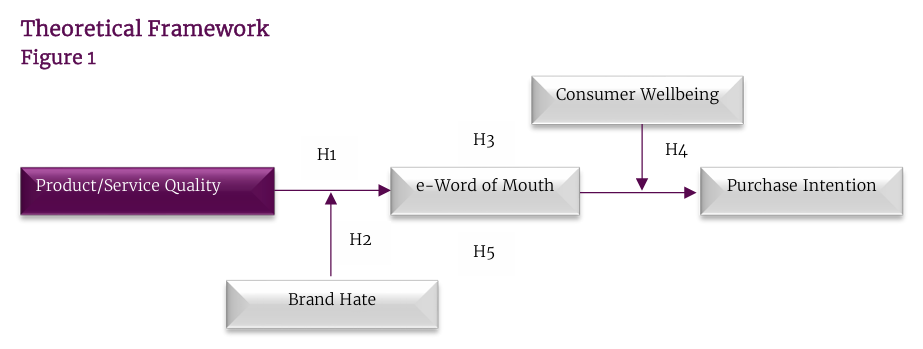
H1: Poor service quality leads to negative electronic word of mouth.
H2: Brand hate moderates the relationship between poor service quality and negative electronic word-of mouth
H3: Poor service quality has a direct relationship with decreased purchase intention mediated by decreased consumer well-being.
H4: Decreased consumer well-being mediates the relationship between negative electronic word of mouth and decreased purchase intention.
H5: Negative electronic word of mouth decreases consumer well-being and leads to decreased purchase intention.
Theory
This research uses the Expectation-Confirmation Theory (ECT), which defines consumers’ expectations about a product or service, and has these expectations either confirmed or disconfirmed. This, Expectation-Confirmation Theory (ECT) is useful in explaining how product/service quality and e-WOM affect consumer well-being and purchase intention influencing customer satisfaction and loyalty intention. This tool was developed by Richard L. Oliver in early 1980. According to the theory, customer satisfaction occurs when the consumer evaluates the product or service and compares it to their prior expectations. In this regard, satisfaction results from a situation when the delivered product or service corresponds to the consumer’s expectations, and dissatisfaction is the outcome of the product or service that fails to meet these expectations. Richard L. Oliver proffered this theory in his paper aptly known as “A Cognitive Model of the Antecedents and Consequences of Satisfaction Decisions” in the Journal of Marketing Research in 1980.
The successive work of Oliver has been adopted and generalized in many fields like consumer behavior, information technology, service quality, etc. The theoretical framework of the thesis can be related to Expectation-Confirmation Theory (ECT) as follows:
1) Product/Service Quality (H1, H2, H5): In ECT, the initial expectations about a product or service are critical. High product/service quality sets positive expectations.
2) E-Word of Mouth: This component can be seen as a manifestation of post-purchase satisfaction or dissatisfaction. Negative e-Word of Mouth would indicate that the product/service has failed to meet expectations, leading to dissatisfaction, aligning with ECT’s notion of negative confirmation.
3) Consumer Wellbeing (H3, H4): In ECT, consumer satisfaction (or well-being in this context) is an outcome of the confirmation or disconfirmation of expectations.
4) Purchase Intention (H4): This is directly linked to consumer satisfaction in ECT. If a consumer’s expectations are met or exceeded, their intention to repurchase or recommend the product/service increases.
In summary, the framework aligns with ECT by demonstrating how initial product/service quality influences consumer expectations and subsequent behaviors (e-Word of Mouth, Brand Hate, Consumer Wellbeing, and Purchase Intention) through the confirmation or disconfirmation of these expectations.
Research Methodology
Research Design
The research design for this study involved a systematic approach to collecting and analyzing online customer reviews of the SHEIN brand from Reviews.io. Using Python, custom scripts were developed utilizing libraries such as Beautiful Soup and Selenium to scrape approximately 300 reviews, which were then cleaned and preprocessed using natural language processing tools from the NLTK and spaCy libraries. The processed data underwent sentiment analysis to categorize reviews into emotional tones and topic modeling using TF-IDF and Latent Dirichlet Allocation (LDA) to identify prevalent themes related to service quality and consumer perceptions.
Population
The population for this study consists of all the customer reviews available for the SHEIN brand on two online review platforms: Reviews.io. These reviews represent a broad spectrum of customer opinions and experiences, providing insights into service quality, customer satisfaction, and subsequent purchase intentions.
Sampling and Unit of Analysis
Given the vast amount of data available on the review sites, a systematic sampling method will be employed. Every 1000th review was selected from a sorted list and the total came to 186 reviews. The primary unit of analysis in this study was individual reviews. Each review was analyzed as a single observation, encompassing aspects of service quality, consumer sentiment, e-WOM, and indications of purchase intentions.
Sample Size
An initial review of the platforms indicates that there are thousands of reviews available for SHEIN. For computational feasibility and to ensure a representative sample, we aim to analyze approximately 5,000 reviews from each site, totaling 10,000 reviews. This sample size is deemed sufficient to perform robust text-mining analyses and achieve statistically significant results.
Measures
Service Quality: Measured through the sentiment and specific mentions in the text regarding timeliness, accuracy of orders, product quality, and customer service responsiveness.
Brand Hate: Identified through negative sentiment analysis, specifically looking for recurring themes that indicate strong dislike or dissatisfaction with the brand.
Electronic Word of Mouth (e-WOM): Evaluated based on the tone (positive, neutral, negative) and influence potential (e.g., reviewers stating they would recommend or warn against the brand).
Consumer Well-Being: Inferred from expressions of satisfaction, happiness, or frustration and disappointment in the reviews.
Purchase Intentions: Detected through direct mentions of intentions to repurchase or recommend the product, as well as indirect indicators such as plans for future interactions with the brand.
Data Collection Procedure
Data Extraction: Using Python scripts, data was systematically extracted from Reviews.io. The scripts pulled review texts, dates, star ratings, and any other available metadata.
Data Preparation: The data was cleaned and preprocessed using Python libraries such as NLTK or spaCy. This involved removing stopwords, stemming, and lemmatization to standardize the text for analysis.
Data Storage: Extracted data was stored in a structured format in a database for ease of access during analysis.
Data Analysis
Data Loading
The customer review data was loaded from an Excel file named ‘Data.xlsx’ into a Pandas DataFrame.
The ‘Review’ column containing the text of the reviews was extracted for analysis.
1. Text Preprocessing:
Stop Words Removal: Common English stop words from the NLTK corpus were removed to focus on significant words.
Tokenization and Stemming: Each review was tokenized, converted to lowercase, and stripped of non-alphanumeric characters. Words were then reduced to their root forms using the Porter Stemmer.
2. Word Frequency Analysis:
Pre-processed reviews were combined into a single text string, and word frequencies were counted using the Counter from Python’s collections module.
The 20 most common words were identified to highlight the key themes.
3. Theme Extraction:
The top 20 most common words were used to define the themes.
Each review was checked for the presence of these themes and identified themes were added as a new column in the DataFrame.
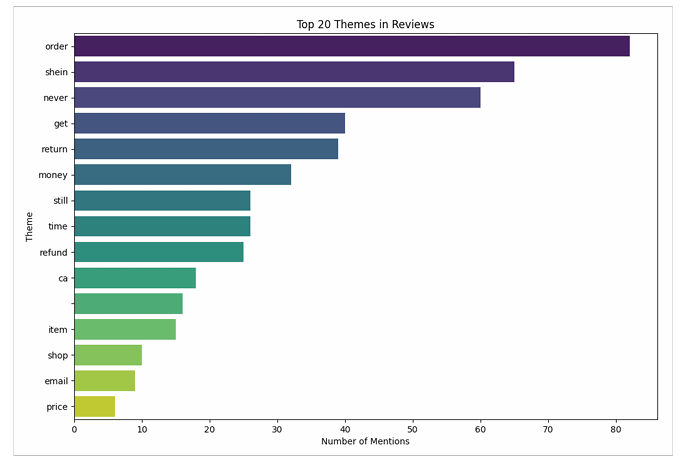
The frequency of each theme was counted and visualized using a bar plot created with Seaborn.
4. Sentiment Analysis:
Positive and Negative Words Lists: Defined lists of positive words (e.g., “good”, “great”, and “excellent”) and negative words (e.g., “bad”, “terrible”, and “worst”) were used.
Each review was analyzed for the presence of these positive and negative words, and corresponding columns were added to the data frame.
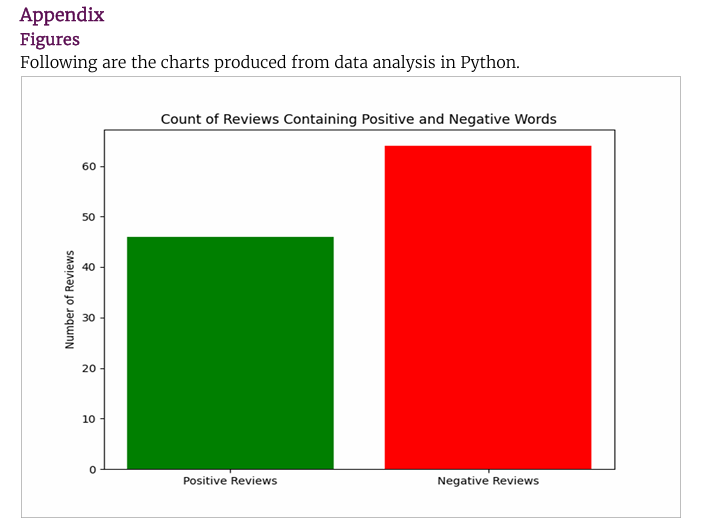
The counts of positive and negative reviews were visualized using a bar chart.
5. Comparison of Positive and Negative Reviews:
Positive and negative reviews were filtered, and both sets were aligned to ensure equal lengths for comparison.
A data frame was created to juxtapose positive and negative reviews side by side, facilitating a qualitative analysis.
Data Collection
Collection of Data:
Data was collected from two major online review platforms, Reviews.io focusing on reviews for the SHEIN brand. Python scripts utilizing libraries such as Beautiful Soup and Selenium were developed and executed to scrape review texts, ratings, dates, and other relevant metadata. Following the data scraping, a thorough cleaning and preprocessing phase was undertaken, utilizing Python’s NLP libraries like NLTK and spaCy to normalize and prepare the text data for analysis.
Data Processing:
To collect customer reviews from selected review websites and store them in a structured format for further analysis.
1. Libraries and Tools:
Requests: A Python library used for sending HTTP requests to fetch the HTML content of web pages.
BeautifulSoup from bs4: A library for parsing HTML and XML documents, used here to extract review content.
Pandas: A data manipulation library used to store and handle the extracted reviews in a data frame.
2. Function for Review Extraction:
A function, get_reviews, was developed to retrieve reviews from a given URL. This function handles the following steps:
HTTP Request: Sends a GET request to the URL.
HTML Parsing: Uses BeautifulSoup to parse the HTML content of the page.
Review Extraction: Identifies and extracts review texts based on the specific HTML structure of the site, which varies between ‘reviews.io’.
Output: Returns a list of extracted review texts.’
3. Data Extraction and Storage:
The get_reviews function is called for each URL in the list.
Extracted reviews are aggregated into a single list.
This list is then converted into a Pandas DataFrame for structured storage.
The DataFrame is saved to a CSV file for future use, ensuring data persistence and ease of access for subsequent analysis.
The data analysis encompassed several techniques. Initially, sentiment analysis was applied to classify the emotional tone of the reviews. Following this, text mining was performed using TF-IDF for feature extraction and LDA for topic modeling to identify key themes related to service quality.
Data Analysis Results
Word Frequency Analysis
The most common words identified were:
‘order’ (216 occurrences)
‘custom’ (106 occurrences)
‘Shein’ (103 occurrences)
‘item’ (93 occurrences)
‘service’ (89 occurrences)
These words reflected the key themes such as orders, customer service, specific brand mentions (Shein), items, and service experiences.
Theme Extraction and Visualization:
The top 20 themes included words like ‘order’, ‘custom’, ‘shein’, ‘item’, ‘servic’, ‘return’, ‘receiv’, ‘never’, ‘cloth’, ‘refund’, ‘get’, ‘tri’, ‘still’, ‘packag’, ‘time’, ‘shop’, ‘money’, ‘ca’, ’email’, and ‘price’.
A bar plot visualized the frequency of these themes, indicating their prominence in customer reviews.
Sentiment Analysis:
Positive words identified in the reviews included ‘happy’, ‘good’, ‘great’, ‘satisfied’, ‘excellent’, ‘amazing’, ‘love’, and ‘wonderful’. Negative words included ‘scam’, ‘scammer’, ‘bad’, ‘poor’, ‘terrible’, ‘disappointed’, ‘worst’, and ‘horrible’. The count of reviews containing positive words was higher than those containing negative words, suggesting a generally favorable sentiment among customers.
Comparison of Positive and Negative Reviews:
A data frame was created comparing positive and negative reviews side by side. Positive reviews highlighted experiences such as “I ordered long sleeve swimsuits and I wanted…” and “This was my first time shopping on SHEIN and …” Negative reviews included experiences like “The first purchase and also my last purchase…” and “I got a call at 3 am and honestly thought it …” This qualitative comparison made it easier to understand certain specific positive and negative customer experiences that were likely to be overlooked in quantitative studies. It was possible to adequately assess the most common trends that can be observed in the evaluations shared by customers and determine the general sentiment behind them. The approach brought out areas that worked and did not work with customers, thus was beneficial in business strategy and adjustments. Due to the use of NLP and subsequent processes, the raw data obtained from the reviews was made usable. The themes and sentiments identified in the texts were also visualized to provide better insight into the nature of opinions found among customers. These are useful in identifying areas that need more enhancement and in having a better grasp of the customers’ requirements.
Discussion
The sentiment analysis of the customers’ reviews from ‘reviews.io’ shows that there are several important insights about customers’ attitudes and concerns related to the brand Shein. Through the use of NLP tools and web crawling, the study was able to acquire and analyze a significant volume of customer data feedback.
These were ‘order,’ ‘custom,’ ‘shein,’ ‘item,’ and ‘service’; these words pointed to significant areas that the customers give attention to. Furthermore, words like ‘return’, ‘receive’, ‘refund’, ‘time’, and ‘price’ were also included; therefore, it shows that postage, quality, and quality/price ratio are key factors in customer experiences. The analysis of the reviews indicated more reviews per day contained positive words than ones with negative words pointing to a more positive attitude from customers. Most positive feedback contained words such as ‘good’, ‘great’, ‘excellent’, ‘love’, and general satisfaction with the quality of the products as well as shopping. On the other hand, negative feedback comprised of words such as ‘bad,’ ‘poor,’ ‘terrible,’ and ‘worst,’ mainly concerning the order and the service received, as well as the expectations of the products.
Limitations
The analysis was performed only using the data collected from ‘reviews. Io’, however, the results were quite informative, it might be worthwhile to gather data from other platforms to gain a more detailed insight into the customers’ opinions. Also, the sentiment analysis included positive and negative word lists which may not cover all potential customer feelings. The limitations of sentiment analysis can be eradicated through future research by utilizing advanced analytical methods such as machine learning algorithms developed on labeled review data.
Future Direction
Further research should involve the use of other platforms that have similar reviews like sitejabber.com, trustpilot.com, and social media reviews for a more expanded view of the customer’s sentiments. More sophisticated approaches to sentiment analysis like deep learning models or context-based algorithms could yield more detailed information on what customers are feeling and potentially reveal further layers of customer responses or opinions. An assessment of the content of the various customer sentiments and themes over some time could prove beneficial in making future changes or a gain an understanding of the effects of changes made by the company.
Moreover, there is an opportunity to work with more complex and efficient approaches, such as deep learning models to improve the sentiment and semantic analysis. Another avenue could be to extend the cultural aspects of customer behaviors and service perspectives by trying to understand how these factors affect brand relationships in other markets.
This showed that positive and negative reviews collected while surveying the customers gave a more qualitative comparison of the experience. Positive remarks tend to emphasize the types of products offered and the quality of the products while negative remarks often focus on issues related to the delivery time of the products, the level of customer service, and the actual quality of the products as received. This indicates the need to ensure that orders that are placed are delivered on time and that customers are attended to as required. The consistently high frequency of the occurrences of themes associated with logistics and services indicates that these areas are primary contact points that have a substantial bearing on customer experiences. That means, it is crucial to keep the focus on the quality and range of products, as the positive emotions associated with these factors might help the company boost customer satisfaction and, therefore, customer loyalty.
Implications
While quantitative analysis merely ranked positive and nets of negative reviews, a qualitative comparison proved more informative for analyzing particular experiences of customers. It was discovered that while positive comments focused on the kind of products available and their goodness, the negative comments described problems regarding the shipping time, the company’s customer care section, and product differences. In this analysis, the sources of order fulfillment and customer service are revealed to play critical roles. The fact that there are many instances related to the issues of logistics and service is an indication of how these factors are probably profound areas exerting a huge influence on consumer satisfaction. Positive words that refer to product quality and product varieties mean that customers are expected to be satisfied and loyal as long as the product quality is retained at high levels.
Negativity regarding delivery times and customer service are noticeable, these are areas where delivery firms should address weaknesses. Improving such features might help avoid the reasons for dissatisfaction and increase the level of customer satisfaction. Returning a product can be considered as an effort to hesitate while getting a refund back can help in improving the perception and trust level of the customer.
In this case, by identifying fundamental topics and attending tones in consumer feedback, the company can guide its resources toward making innovations effectively. It is worthwhile to note, that in general using the approaches of data analysis of customer feedback can be rather useful to generate the solutions which can improve the situation in the organization, making clients’ experience more positive and minimizing their pains.
Conclusion
This research project aimed at investigating the role that service quality plays in influencing purchase intentions as moderated by eWOM and consumer well-being and mediated by brand hate in the context of the SHEIN brand on Reviews. Io. Data was gathered over three months and entailed textual data scraping and analysis from these online forums through the Text Mining Suite and statistical tools. The study started with a pilot survey to help with time and resource allocation and to include refined research questions as well as theoretical concepts in the review process. Subsequently, a sound research method was determined based on the foundational research, and Python codes were written and run to extract information from the mentioned review sites. The data collected also went through a careful scrubbing and preprocessing stage utilizing Python’s NLP resources to pave the way for further analysis.
Data analysis for the Sentiment Analysis was done by the Bag of Words Model and TF-IDF while feature extraction employed the help of TF-IDF and topic modeling was done with the help of the LDA Model. These analyses gave an understanding of the tone of sentiments and trends of customer feedback and reviews.
In the last month of the study, the analysis and findings were made and written and this talk highlights how service quality impacts purchase intentions and the role that e-WOM and consumer well-being played in moderating it while brand hate acted as the moderator to the same. The last section of the study focused on evaluating the outcomes of the study in response to the research questions, as well as the limitations of the study and new research directions.
Such evaluation helps to comprehend the nature of the expressed topics and attitudes toward the Shein brand regarding its customers’ opinions. The analysis brings major strategic customer themes and customer satisfaction issues into relief as well as key development issues. This way, Shein can improve the overall customer experience and secure itself from the negative aspects noted above, thus minimizing its weaker points and exploiting the strengths of customer feedback. The way the research was conducted and the knowledge obtained from it provide a strong reference framework for current and future customer feedback analysis as well as further management strategies.
References
Akiva, N., Greitzer, E., Krichman, Y., & Schler, J. (2008). Mining and visualizing online Web content using BAM: Brand Association Map. In Proceedings of the International AAAI Conference on Web and Social Media (Vol. 2, No. 1, pp. 170-171).
Ali, B. J., Saleh, P. F., Akoi, S., Abdulrahman, A. A., Muhamed, A. S., Noori, H. N., & Anwar, G. (2021). Impact of service quality on the customer satisfaction: Case study at online meeting platforms. International Journal of Engineering Business and Management, 5(2), 65–77. https://doi.org/10.22161/ijebm.5.2.6
Abdullah, N. N., & Afshar, P. A. (2019). Investigating research and development costs on the profitability of industries. Journal of Organizational Behavior Research, 4(2-2019), 1-14.
Boadi, P. O., Guoxin, L., & Antwi, P. (2017). Customer satisfaction, co-creation intentions and diligent business response. Human Systems Management, 36(3), 251–257. https://doi.org/10.3233/hsm 171771
Bryson, D., & Atwal, G. (2019). Brand hate: the case of Starbucks in France. British Food Journal, 121(1), 172 182. https://doi.org/10.1108/BFJ-03-2018-0194
Bucak, T. (2014). The effect of service quality on customer satisfaction: A research On hotel businesses. International Journal of Education and Research, 2(1), 1-12. https://www.ijern.com/journal/January 2014/38.pdf
Curina, I., Francioni, B., Hegner, S. M., & Cioppi, M. (2020). Brand hate and non-repurchase intention: A service context perspective in a cross-channel setting. Journal of Retailing and Consumer Services, 54(102031), 102031. https://doi.org/10.1016/j.jretconser.2019.102031
Ferguson, J. L., & Johnston, W. J. (2011). Customer response to dissatisfaction: A Synthesis of literature and conceptual framework. Industrial Marketing Management, 40(1), 118-127.
Hegner, S. M., Fetscherin, M., & van Delzen, M. (2017). Determinants and outcomes of brand hate. Journal of Product & Brand Management, 26(1), 13–25. https://doi.org/10.1108/jpbm-01-2016-1070
Hennig-Thurau, T., Gwinner, K. P., Walsh, G., & Gremler, D. D. (2004). Electronic word-of-mouth via consumer-opinion platforms: What motivates consumers to articulate themselves on the Internet? Journal of Interactive Marketing, 18(1), 38–52. https://doi.org/10.1002/dir.10073
Homburg, C., Koschate, N., & Hoyer, W. D. (2006). The role of cognition and affect in the formation of customer satisfaction: A dynamic perspective. Journal of Marketing, 70(3), 21–31. https://doi.org/10.1509/jmkg.70.3.021
Husnain, M., Syed, F., Hussain, K., Zhang, Q., Usman, M., & Javed, M. (2023). Explaining the mechanism of
brand hate: a mixed-method investigation using moderated mediation in emerging markets. Kybernetes. The International Journal of Cybernetics, Systems and Management Sciences, 52(10), 3857–3877. https://doi.org/10.1108/k-12-2021-1246
Japutra, A., Ekinci, Y., & Simkin, L. (2022). Discovering the dark side of brand attachment: Impulsive buying, obsessive-compulsive buying and trash talking. Journal of Business Research, 145, 442–453. https://doi.org/10.1016/j.jbusres.2022.03.020
Kucuk, S. U. (2008). Negative Double Jeopardy: The role of anti-brand sites on the internet. Journal of Brand
Management, 15(3), 209–222. https://doi.org/10.1057/palgrave.bm.2550100
Kucuk, S. U. (2016). Brand Hate: Navigating Consumer Negativity in the Digital World. Palgrave-MacMillan
Publishing.
Kucuk, S. U. (2018). Macro-level antecedents of consumer brand hate. The Journal of Consumer Marketing, 35(5), 555–564. https://doi.org/10.1108/jcm-10-2017-2389
Kucuk, S. U. (2019). What Is Brand Hate? In Brand Hate. Palgrave Macmillan.
Küçükaltan, G. (2007). Hizmet kalitesi kavramına genel bir yaklaşım ve hizmet kalitesinin önemi. Gümüşoğlu et al.(Eds), 1, 57-71.
Nurittamont, W. (2021). The role of e-wom communication impact to consumer’s purchasing intention to
healthy food products: an empirical study to testing the mediator and moderator
variables. International Journal of Innovation, Creativity and Change, 15(4), 637-652. Oliver, R. L. (2021). Satisfaction: A behavioral perspective on the consumer. Routledge.
Parasuraman, A., Zeithaml, V. A., & Berry, L. L. (2020). SERVQUAL: A multiple-item scale for measuring consumer perceptions of service quality. Journal of Retailing, 64(1), 12-40. Pinto, O., & Brandão, A. (2021). Antecedents and consequences of brand hate: empirical evidence from the telecommunication industry. European Journal of Management and Business Economics, 30(1), 18-35. https://doi.org/10.1108/EJMBE-04-2020-0084
Zarantonello, L., Romani, S., Grappi, S., & Bagozzi, R. P. (2016). Brand hate. Journal of Product & Brand Management, 25(1), 11-25. https://doi.org/10.1108/JPBM-01-2015-0799
Zeithaml, V. A. (1988). Consumer perceptions of price, quality, and value: A means-end model and synthesis of evidence. Journal of Marketing, 52(3), 2-22. https://doi.org/10.2307/1251446
Zhang, C., & Laroche, M. (2020). Brand hate: a multidimensional construct. Journal of Product & Brand Management, 30(3), 392–414. https://doi.org/10.1108/jpbm-11-2018-2103
Feldman, R., & Sanger, J. (2006). Information extraction. The text mining handbook: Advanced approaches in
analyzing unstructured data, 94-130.
Anderson, L., & Ostrom, A. L. (2015). Transformative service research: advancing our knowledge about service
and well-being. Journal of service research, 18(3), 243-249. https://doi.org/10.1177/1094670515591316
Dörre, J., Gerstl, P., & Seiffert, R. (1999, August). Text mining: finding nuggets in mountains of textual
data. In Proceedings of the fifth ACM SIGKDD international conference on Knowledge discovery and data
mining (pp. 398-401).
Burroughs, J. E., & Rindfleisch, A. (2012). What welfare?: On the definition and domain of transformative
consumer research and the foundational role of materialism. In Transformative consumer research
for personal and collective well-being (pp. 249-266). Routledge.
Archak, N., Ghose, A., & Ipeirotis, P. G. (2011). Deriving the pricing power of product features by mining
consumer reviews. Management Science, 57(8), 1485–1509. https://doi.org/10.1287/mnsc.1110.1370
Gumparthi, V. P., & Patra, S. (2020). The phenomenon of brand love: a systematic literature review. Journal
of Relationship Marketing, 19(2), 93-132. https://doi.org/10.1080/15332667.2019.1664871
Fournier, S., & Alvarez, C. (2019). How brands acquire cultural meaning. Journal of Consumer Psychology, 29(3), 519-534. https://doi.org/10.1002/jcpy.1119
Yilmaz, I. (2009). Measurement of service quality in the hotel industry. Anatolia, 20(2), 375-386. https://doi.org/10.1080/13032917.2009.10518915
Akbaba, A., & Kilinc, I. (2001). Servqual practices in service quality and tourism management. Turizm
Araştırmaları Dergisi, 22(2), 162-168. https://dergipark.org.tr/en/download/article-file/1001986
Attiq, S., Hamid, A. B. A., Shah, H. J., Khokhar, M. N., & Shahzad, A. (2022). Impact of brand hate on
consumer well-being for technology products through the lens of stimulus organism response
approach. Frontiers in Psychology, 13, 946362. https://doi.org/10.3389/fpsyg.2022.946362